

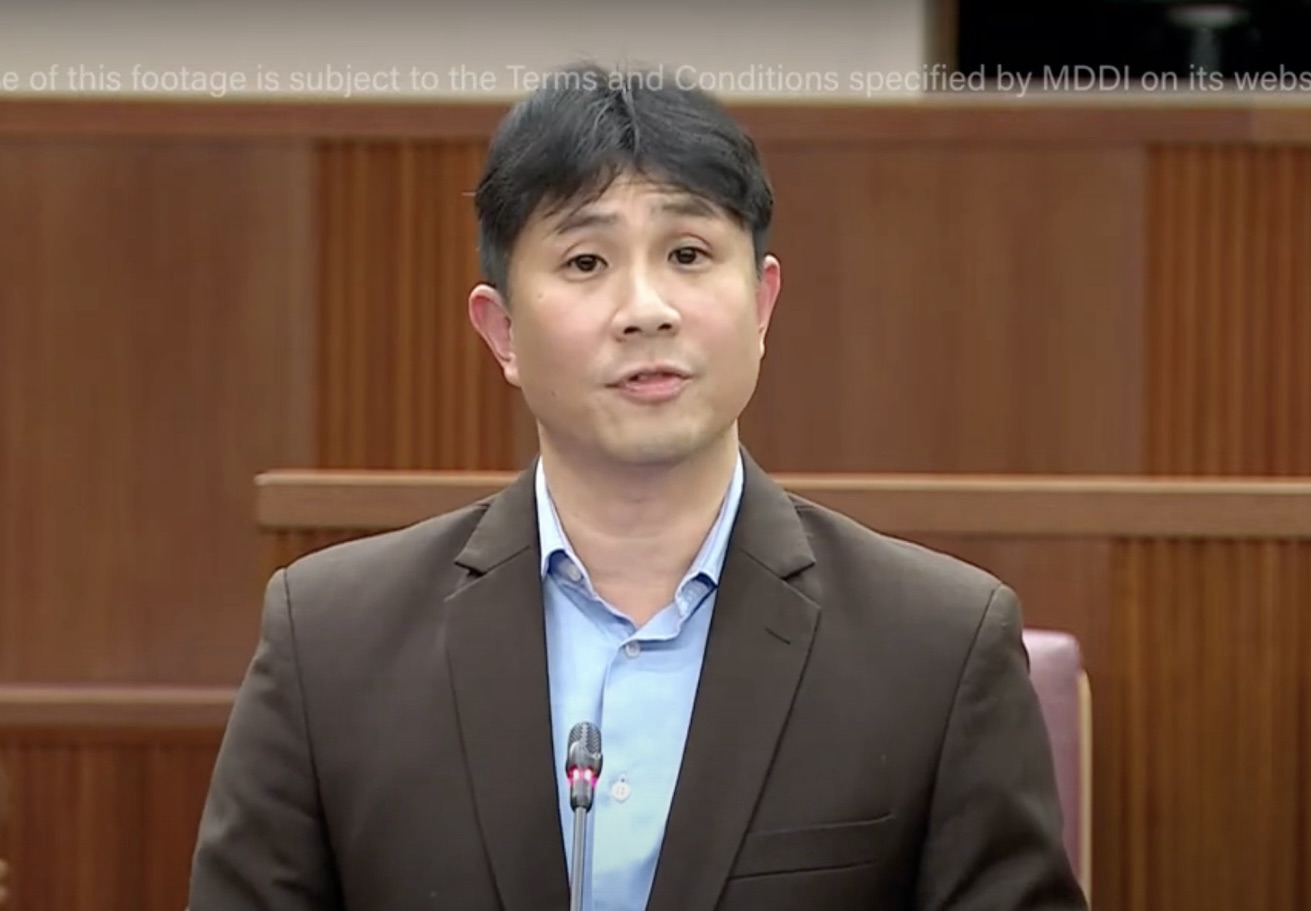
Minister for Culture, Community and Youth Edwin Tong has stated that the government opts to leave the quantum of rewards and cash incentives for major Games medals like the Olympics and Paralympics to the private sector in order to focus on funding athlete development and supporting a broader base of sports.
While Singapore’s S$1 million payout for an Olympic gold medal is known to be the highest globally, Mr Tong acknowledged the contributions of private corporations in raising this amount but emphasised that it does not address other aspects of sports development.
“It is very good, but it is also rewarding people who are more or less at the end of the journey winning a gold medal,” said Mr Tong.
“It doesn’t directly go towards helping those in development, which is what we want to do with a broader spend, so that we can reach a target broader base, mass appeal, and develop a pipeline so that more athletes, para as well as able-bodied athletes, can reach the apex of their sport and reach their aspiration.”
He was responding in Parliament to concerns raised by members of the House, including Workers’ Party MP Associate Professor Jamus Lim, regarding the disparity in monetary rewards between Olympians and Paralympians.
WP’s Jamus Lim calls for equal recognition and rewards for Olympians and Paralympians
Sengkang Member of Parliament Jamus Lim questioned why the government, despite funding both reward schemes through the Tote Board, has not ensured equal financial recognition.
Assoc Prof Lim refuted arguments that Paralympians deserve smaller rewards due to fewer participants or less popularity, equating it to discrimination against less popular sports.
He called for parity in rewards, citing examples from countries like Canada, the United States and France, and urged the government to align with Singapore’s values of equality and non-discrimination.
In response, Mr Tong emphasised that these rewards are determined by non-governmental entities like the Singapore National Olympic Council (SNOC) and the Singapore National Paralympic Council (SNPC), not the government.
Singapore’s competitive athlete reward levels compared to global standards
Addressing international comparisons, Mr Tong pointed out that Singapore’s reward levels are among the highest globally, with other countries offering significantly lower rewards.
For example, Canada awards $20,000 for a Paralympic gold, far below Singapore’s $500,000.
He argued that the government’s investments create a broader base of support for sports development, beyond just rewarding medal winners at the end of their journey.
This approach, Mr Tong explained, ensures sustainable development in sports, allowing the government to focus on building a robust sports ecosystem and nurturing future talent.
In a follow-up exchange, Assoc Prof Lim acknowledged the budgetary constraints but pressed the Minister on whether he would agree with the principle of equalising awards for all athletes.
He noted that while Singapore’s reward amounts are comparatively higher than those in other nations, the country’s wealth and lower overall medal count should make it more feasible to enhance these awards.
Minister Tong affirmed his support for equalising support for all athletes, regardless of whether they are para-athletes or able-bodied.
He highlighted the government’s approach, which includes establishing para sports academies and ensuring that para-athletes compete alongside able-bodied athletes in various National Sports Associations (NSAs).
However, Mr Tong cautioned against focusing solely on equalising incentives.
He noted the importance of providing substantive support for para athletes and raised concerns that prioritising equality in rewards might overlook the broader context of the support already provided.
The motion was attended by 17 Olympians and Paralympians, including kitefoiler Maximilian Maeder, swimmer Yip Pin Xiu, and boccia player Jeralyn Tan.
Maeder received S$250,000 (US$191,000) for his Olympic bronze medal, while Yip earned S$1 million for her two gold medals at the Paralympics. For Tan’s historic silver at the Paralympics, she was awarded S$300,000, while a silver medal at the Olympics comes with a cash reward of S$500,000.
These cash payouts are provided under the Major Games Award Programme (MAP) for able-bodied athletes and the Athletes’ Achievement Awards (AAA) for para-athletes.
Both the MAP and AAA are private award schemes managed by the Singapore SNOC and the SNPC, respectively.
THIS STORY HAS BEEN ADAPTED FROM THEONLINECITIZEN